
Holland City Directory Collections and Access
Holland's documented directory trail begins with a cataloged local title, not a promise of uninterrupted annual publication. The Herrick District Library catalog lists Holland City Directory as beginning in 1894 and available for in-library use. A historic-district bibliography identifies several individual Kanter and Inter-State volumes as well. Together, those references provide strong starting points, but a researcher should ask to inspect the actual volume list rather than fill unlisted years with guesses.
| Collection | Documented years | Where held | Access |
|---|---|---|---|
| Holland City Directory, mixed publishers | 1894- catalog start, not every year confirmed | Herrick District Library | In-library use |
| J.D. Kanters business and city directory | 1894 | Local bibliography and local-history collections | Local reference research |
| J.D. Kanter Holland City Directory | 1897-98, 1901-02, 1903-04, 1913-14 | Local-study bibliography and area collections | Inspect individual holdings |
| Inter-State city directory and Ottawa County gazetteer | 1908 | Local bibliography and area repositories | City and county context |
| Holland-area rural directory | 1924-25 | Local-study bibliography | Includes nearby communities |
The rural volume covers Holland, Grand Haven, Zeeland, Coopersville, and Spring Lake, so an address or business near a municipal edge can appear in a broader geography. That scope is helpful when a family moved between nearby communities. It also means a listed place should be recorded exactly as printed before comparing it to current boundaries.
The Herrick District Library Genealogy Department is the first local stop for Holland city directory research.
Its main-level department combines local cemetery records, family histories, ship records, newspaper indexes, and public microfilm equipment with the directory work.
Holland Directory Years and Publishers
The publisher and date matter because each book has its own coverage and arrangement. The catalog names R.L. Polk & Co., John D. Kanters, and the Inter-State Directory Company as contributors to the Holland title. The known Kanter volumes cluster around the turn of the twentieth century, while the 1908 Inter-State volume adds Ottawa County gazetteer material. The 1924-25 directory reaches beyond Holland proper. None of those findings establish the last printed Holland issue or an unbroken sequence between the documented books.
| 1894 | J.D. Kanters Business & City Directory is identified in the local bibliography. |
|---|---|
| 1897-1914 | Specific Kanter volumes are documented for 1897-98, 1901-02, 1903-04, and 1913-14. |
| 1908 | Inter-State produced a city directory and Ottawa County gazetteer. |
| 1924-25 | A multi-city and rural directory supplies a wider regional crosswalk. |
The Herrick catalog record is a useful way to confirm that a requested Holland city directory is a local, in-library title before planning a visit.
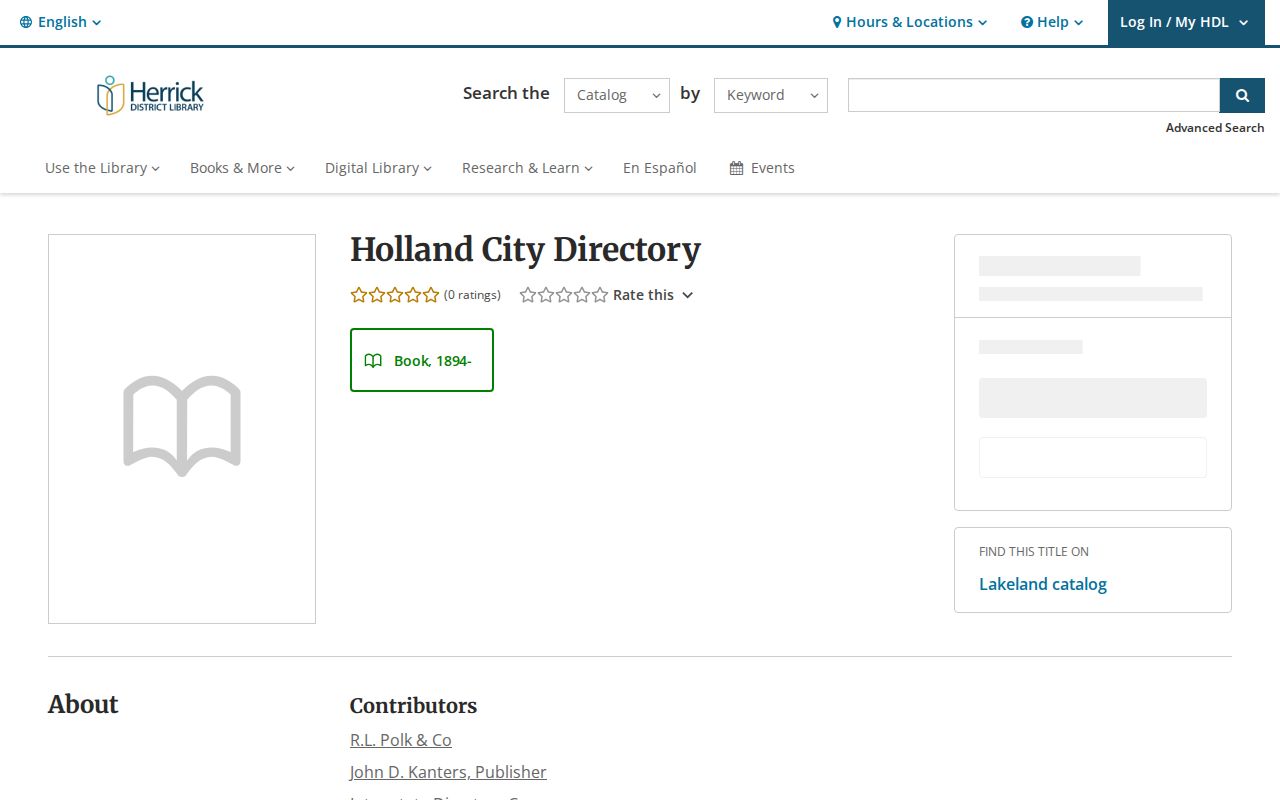
Catalog language beginning with 1894 identifies the run's starting point, while the individual volumes and their condition still need to be checked at the library.
For a statewide fallback, the Library of Michigan city directory guide describes Polk volumes reaching into the late nineteenth century and Bresser volumes commonly starting in the late 1960s. Its print holdings are arranged by city or county on the second floor, with microfilm and fiche in the microfilm room. Library database access can include Ancestry Library Edition and HeritageQuest, but Holland-specific availability still depends on the local catalog and the volume in hand.
Reading a Holland City Directory Entry
A city directory entry is an index record, not a full biography. Depending on the publisher and year, a surname arrangement may identify a head of household, occupation, address, household notation, ownership or renter indication, and telephone information. A business entry can add service, office address, or a professional listing. The research material did not include a legible Holland entry scan, so exact punctuation, abbreviations, and marks should not be assumed from another city's volume.
| Name line | May list a head of household, initials, spouse or another household notation. |
|---|---|
| Occupation | May identify work or a business connection, depending on the volume. |
| Street address | Links the surname entry to the street arrangement and later property research. |
| Owner or renter mark | May appear in some editions; read the book's own key before treating a mark as proof. |
| Telephone or movement note | May help resolve a spelling or move, but is not present in every run. |
- Criss-cross directory
- A street-order arrangement that places addresses by street name and house number instead of by surname.
- Householder index
- A name arrangement that may list only the household head rather than every person at an address.
- Abbreviation key
- The front matter that explains a volume's shorthand. Read it before interpreting labels such as r, h, or wid.
Preserve the page, volume year, name form, and every uncertain mark in research notes. That small discipline makes it possible to revisit an interpretation when another record gives a fuller name or a corrected address.
Holland City Directories by Street and Phone
When a surname search fails, change the entry point. The street portion of a Holland city directory can place residents or businesses in address sequence, which is useful for an old house or a neighbor's surname. A phone arrangement may connect a number to a household or business when the name is difficult to read. Business and gazetteer sections add local services, addresses, and professional listings. These modes complement one another, and none should be treated as a complete list of everyone at an address.
The Library of Michigan guide shows why format matters when using a city directory.
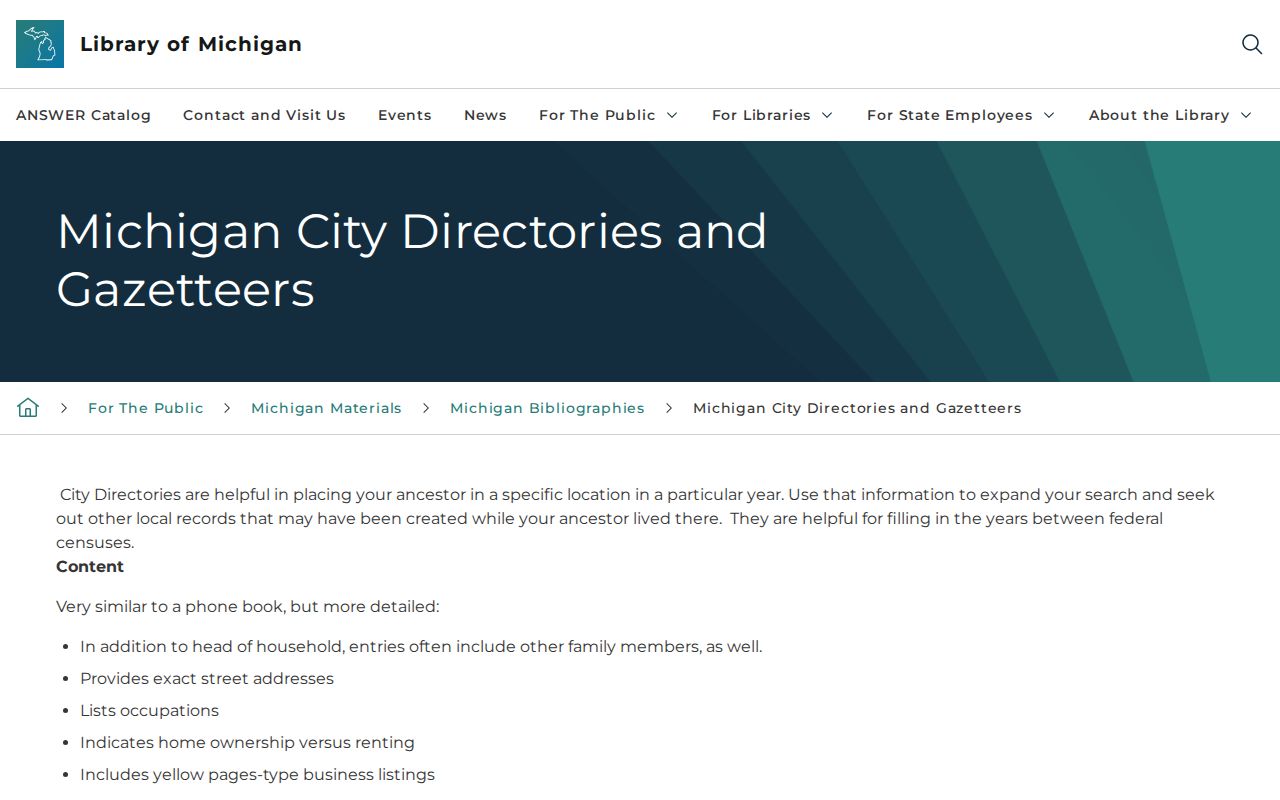
Its distinction among surname, street, phone, and business arrangements gives a practical route around a misspelled name or an incomplete household listing.
For a modern parcel or street-number trail, the address-focused records are handled on the Holland By Street directory. Historical directory evidence is strongest when it is copied faithfully and then compared with the parcel's legal description, deed history, or a dated notice.
Herrick's Holland Microfilm Desk
Herrick offers two public microfilm readers, including a digital reader that can email scans. That matters when a directory citation leads to a newspaper notice, because an index can be turned into a saved article image without removing a reel from the building. The department also holds local cemetery records, family histories, ship records, and newspaper indexes. This combination lets a researcher test an address or surname across several local sources during the same visit.
The newspaper shelf fills many gaps between city directories. Herrick has Holland Sentinel and Holland Evening Sentinel microfilm for 1912-2020, Holland City News microfilm for 1872-1977, and Ottawa County Times microfilm for 1892-1905. The Sentinel's digitized collection runs from 1997 forward through NewsBank for library users. Indexes are useful leads, but Herrick cautions that they are not always complete.
Holland Collections Beyond the Library
Holland's historical repositories divide the work in useful ways. The Hope College Archives and Special Collections at Van Wylen Library has online finding aids and collections tied to Hope College, Western Theological Seminary, and local organizations. Its address is 53 Graves Place, and many materials require an appointment. Hope's digital holdings include local newspapers, reports, oral histories, publications, and Dutch-settlement material that can give a directory name more context.
Hope Archives supplies a second local path when a Holland city directory points toward an institutional or church collection.
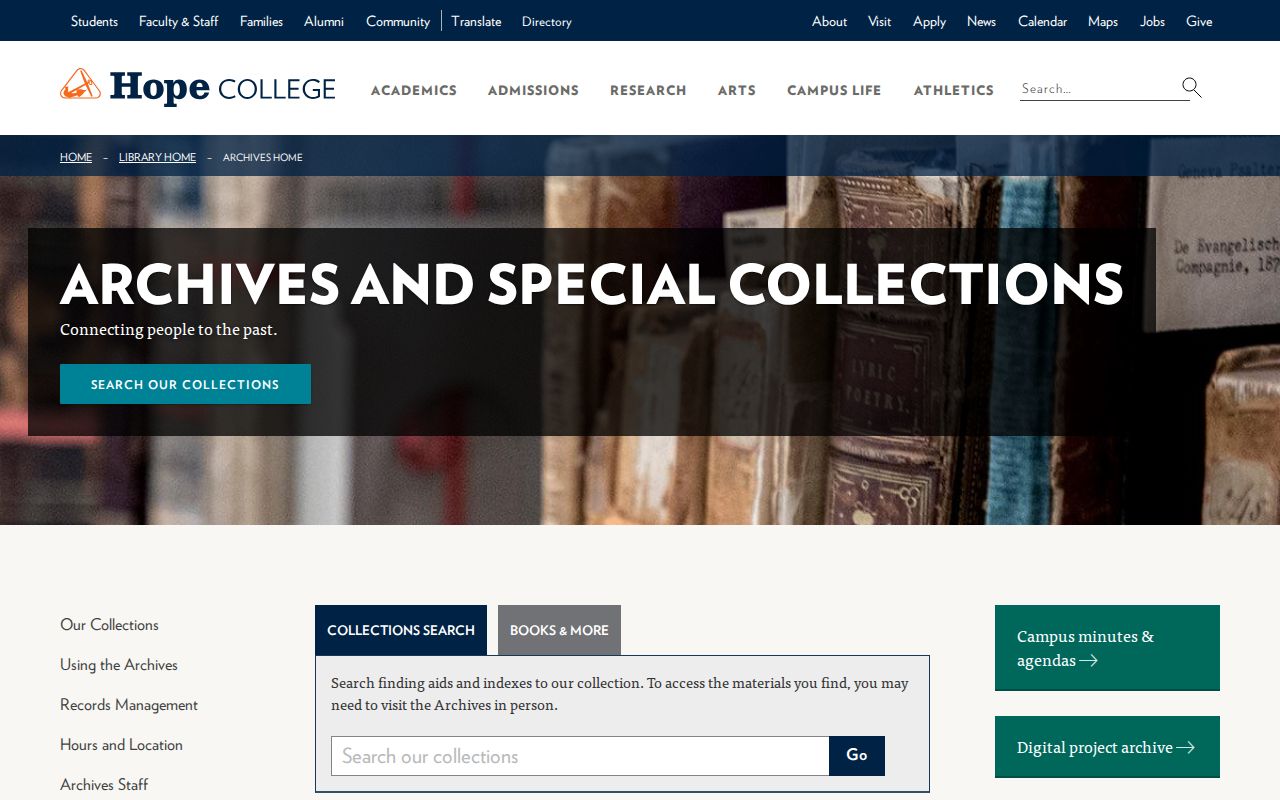
Finding aids help identify a collection before an appointment, while the repository can clarify the access conditions for the original material.
The Holland Museum collection holds more than 100,000 artifacts and archival materials about area residents, businesses, organizations, churches, and schools. Its archives are appointment-only. Mary Elhart can be reached at 616-796-3326 or melhart@hollandmuseum.org. Newspapers, diaries, correspondence, Bibles, family documents, business files, photographs, and subject or biography files make the museum a strong next stop when a directory name needs a local source beyond a list.
The Holland Museum collection page identifies the appointment-based archive behind many Holland historical directories and family names.
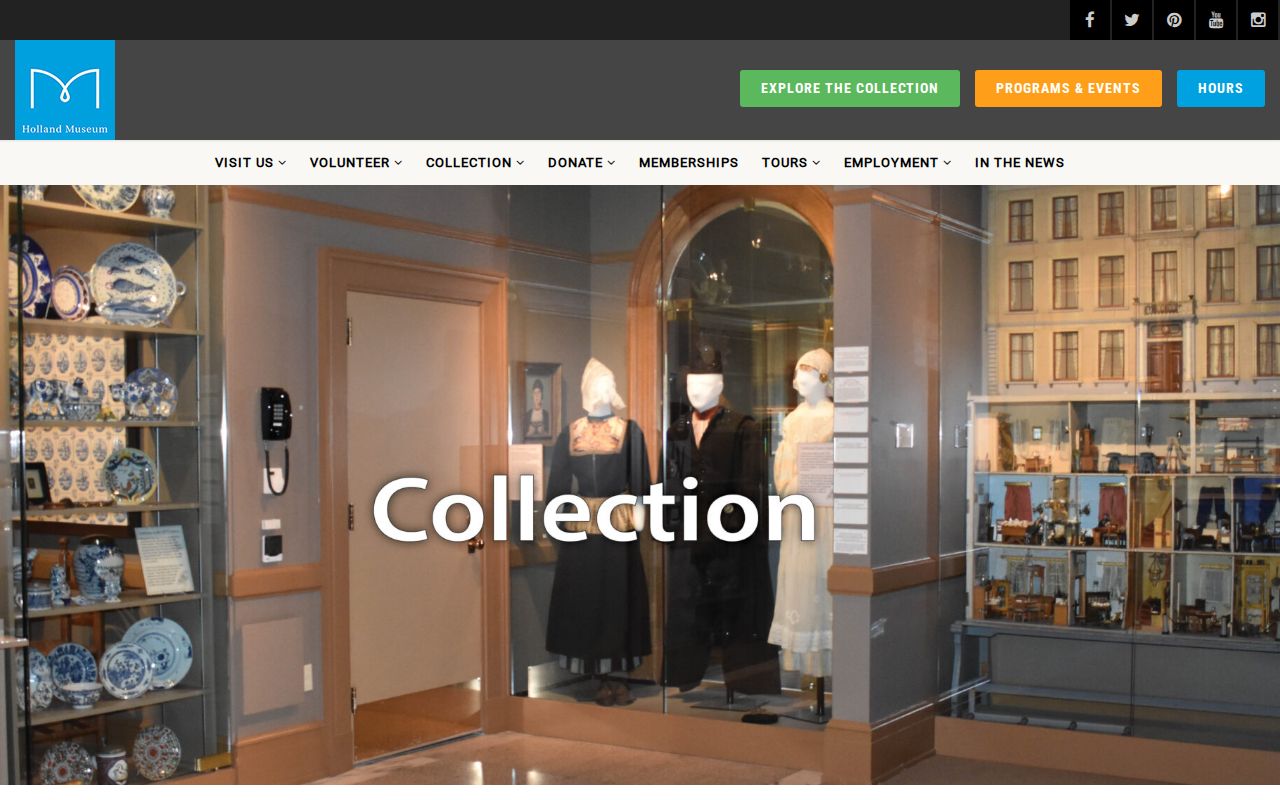
Museum material can connect a directory address to a family paper, organization file, or photograph, but each collection has its own access conditions.
Holland City Directory Newspaper Companions
Directories are snapshots. Newspapers can help date the movement between them. Hope's digitized Holland City News collection provides access to many articles from a paper that ran from 1872 to 1977. Herrick also links the Van Reken Index, which covers names and subjects across the Holland Sentinel, Holland City News, Ottawa County Times, and Grand Rapids Press for 1912 through 1990. Search a surname, spelling variant, street, or business name with the directory year in mind.
The digital Holland City News collection provides a direct place to test a directory name against contemporaneous notices.
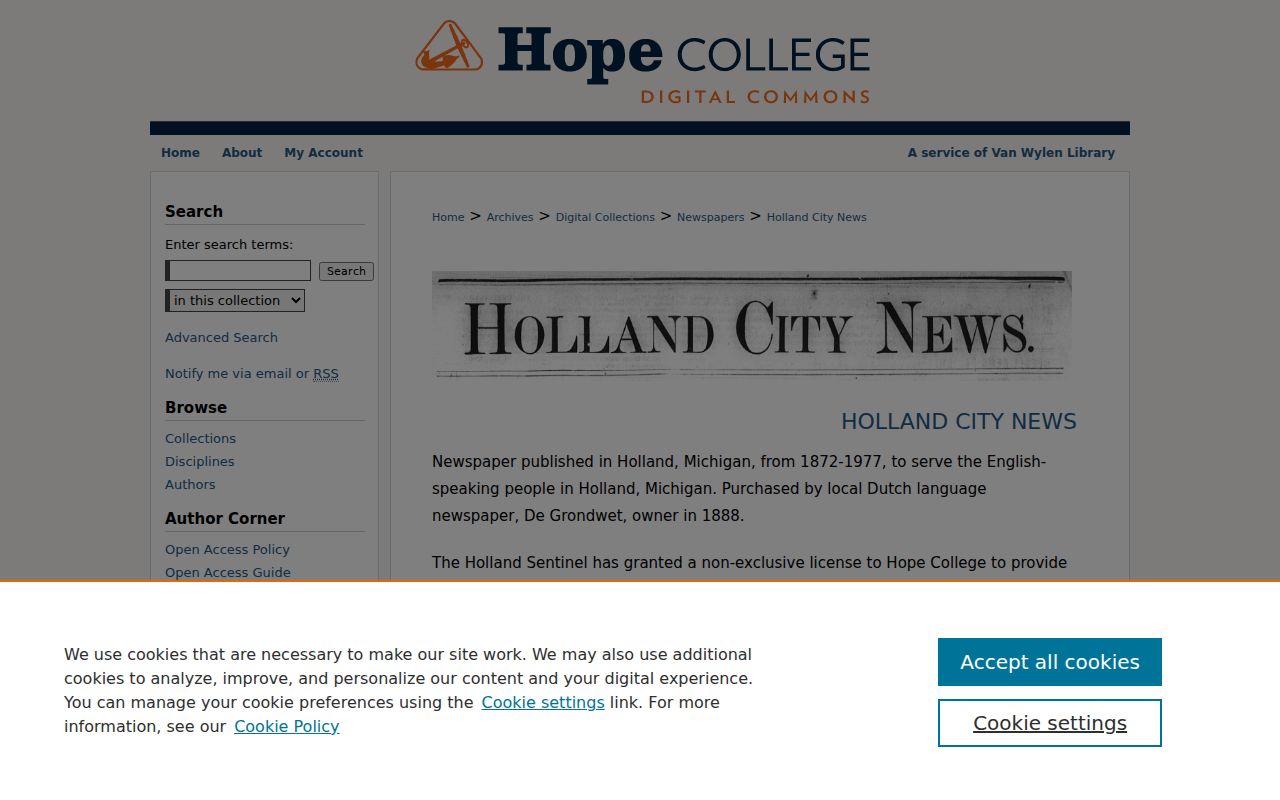
A notice may supply a date, relationship, business address, or spelling that helps distinguish two people with similar names.
Obituary indexes also matter near the end of a household trail. The library's local indexes include Holland Evening Sentinel obituary coverage for 1912-1976 and later Sentinel obituary series through 2020. An index hit is a lead to verify on microfilm or in the available digital collection.
Trace a Holland City Directory Household
Work from a known name, approximate year, or address, then preserve the evidence in order. Directory publication date is not a precise move date, and a household can be recorded under initials, a maiden name, an anglicized spelling, or a business name. Holland's Dutch settlement history makes careful variant searching especially worthwhile. Pair each local result with a record that has an independent date or relationship.
- Search the surname and its variants in the closest documented directory year, preserving initials and all address details.
- Record the address, occupation, spouse or household notation, owner or renter mark, phone number, employer or business, and any move notation that appears.
- Turn to the street arrangement and inspect nearby house numbers, even if the surname entry was missing.
- Pair the directory date with the relevant federal census schedule, observing the 72-year public release rule for individual schedules.
- Confirm a change with a deed, obituary, marriage record, newspaper notice, or permit rather than relying on one printed line.
A city directory is most valuable as a bridge between records. It can point from a name to a street, from a street to a newspaper date, or from an occupation to a business listing. Those connections are more reliable when the original spelling and the publication's own abbreviations remain part of the notes.
Holland City Directories Have Gaps
A missing listing does not prove a person was absent from Holland. Some formats list only household heads. Women, children, renters, seasonal residents, lodgers, and people entered under a variant spelling may be missing. A city directory may also cover a wider service area than the city boundary, and the documented Holland run is intermittent rather than established as annual coverage.
Use the street index, phone arrangement, newspapers, cemetery material, census schedules, deeds, and the archive repositories to test the gap. Keep a distinction between a no-hit, a confirmed absence, and an unsearched volume. That distinction prevents a reasonable historical question from becoming an unsupported claim.
Note: Preserve a photograph or transcription of the abbreviation key with each Holland city directory citation, because the same mark can change meaning across publishers and years.